
Tech-led micro-insurance trends could widen protection for African smallholder farmers
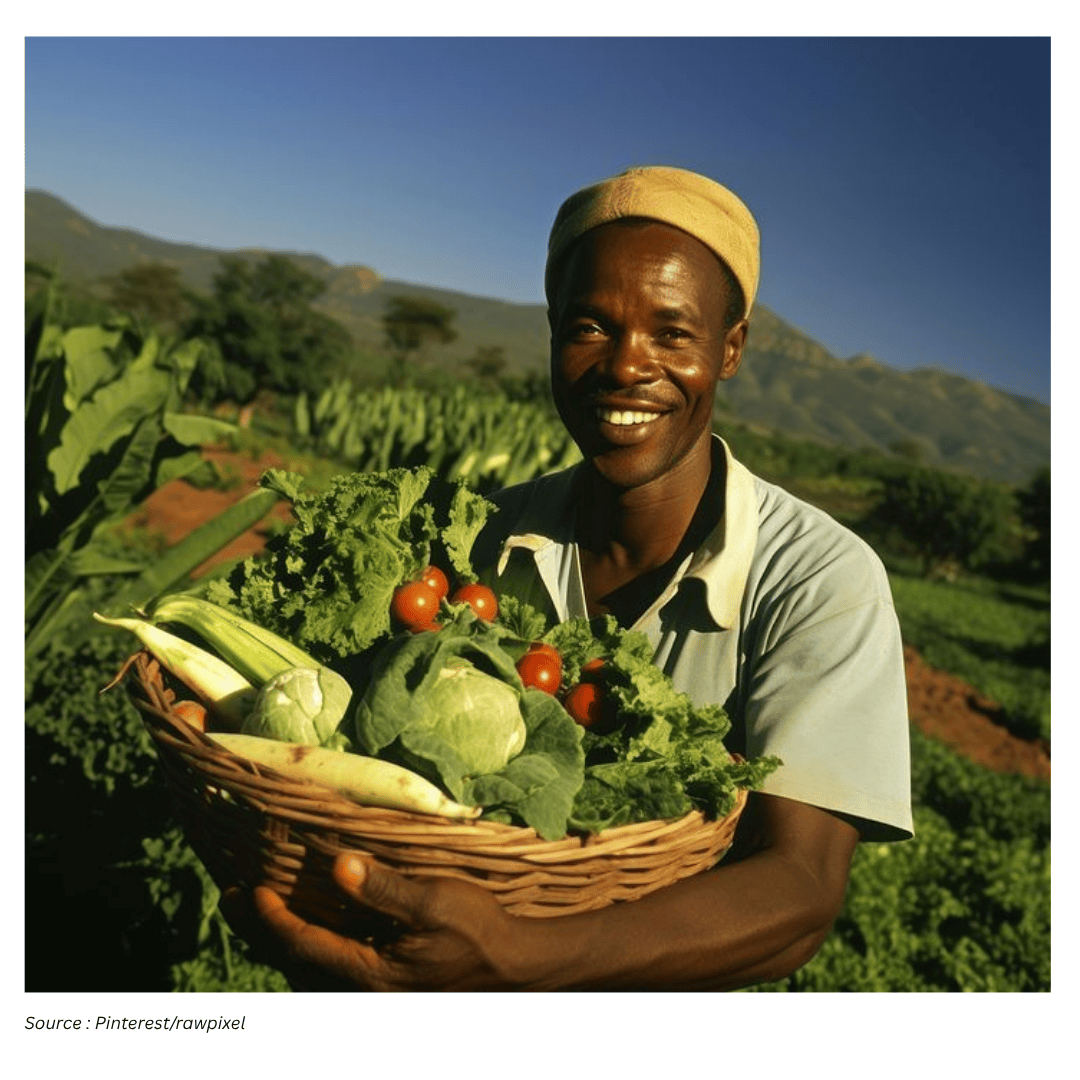
Agricultural risk is rising, but insurance remains out of reach for many
Across Africa, small-scale farmers and pastoralists are increasingly exposed to storms, droughts, floods and heatwaves that can wipe out crops and livestock. Climate change has made farming riskier than ever, particularly for livelihoods tied to rain-fed agriculture. Alongside extreme weather, farmers also face pests and diseases that have become more frequent, while rising temperatures mean crops that once matched local conditions may no longer thrive.
The stakes are high. Globally, nearly one in five people are at risk of facing a severe weather event they will struggle to recover from. In Africa, that figure is higher: two in every five people face that risk. For rural households whose income depends on a single growing season, a shock can be more than a temporary setback—it can be a blow that is difficult to recover from without support.
Yet insurance coverage remains limited. Very few farmers in Africa are insured against weather shocks, even as climate disasters become more common. One reason is structural: for many insurers, the costs of marketing products, signing up clients and verifying losses can exceed the value of the premiums and payouts involved when serving smallholders. Another challenge is informational. Insurance companies often struggle to assess an individual farmer’s risk, or to evaluate farmers’ efforts to prevent damage. This can make insurers reluctant to offer coverage to smallholder farmers at scale.
The consequences extend beyond the immediate loss of crops or livestock. Even the possibility of a bad season can discourage farmers, pastoralists and small enterprises from investing in their farms and businesses. That hesitation can suppress productivity and income, reinforcing a cycle in which households remain vulnerable and underinvested.
Why index-based insurance dominates—and where it falls short
Where agricultural insurance is available, index-based insurance is often the main option. Unlike traditional indemnity insurance, index-based products do not check conditions on every individual farm. Instead, they use general data to estimate losses for a region. The index might rely on rainfall measured at nearby weather stations, vegetation measured via satellite images, or average crop yields in an area.
This design has a clear advantage: it is cheaper to administer. Because it does not depend on assessing each farmer’s individual effort to prevent damage, insurers can keep costs lower and extend coverage to more clients. For markets where transaction costs are a major barrier, index-based insurance can offer a practical path to broader access.
But index-based insurance also has a well-known weakness: basis risk. Basis risk refers to the mismatch between what the index indicates and what a farmer experiences on their own plot. A farmer’s crops may be destroyed while the insurer’s regional data suggests conditions were not severe enough to trigger a payout—meaning the farmer receives nothing despite real losses. The opposite can also happen: the data may suggest damage and trigger compensation even if a farmer’s crops are fine. Either way, the gap between compensation and actual damage can undermine trust and discourage uptake.
Another friction point is that some farmers may not even realise they are insured when coverage is bundled with other products, such as credit or fertiliser. If people do not understand that they have insurance—or what they are entitled to when a shock occurs—then the product cannot reliably build confidence or resilience.
New trends aiming to make agricultural insurance cheaper, clearer and more accurate
Economists Berber Kramer and Ruth Vargas Hill, writing in a policy note addressed to the Group of 20 (G20) economies, argue that technologically advanced and cheaper types of agricultural insurance already exist and could be rolled out more widely across Africa. Their focus is on practical innovations that can reduce costs, improve how losses are assessed, and align products more closely with the realities farmers face.
Several approaches stand out as particularly relevant for scaling protection to smallholders and pastoralists:
- Insurance coupons that allow farmers to purchase coverage for specific periods when they anticipate heightened weather risk.
- Informal insurance networks that build on existing community groups to pool resources for members facing losses.
- Picture-based insurance that uses smartphone photos to assess damage remotely, combining affordability with greater accuracy.
- Gender-based insurance designed to address risks faced by women farmers.
Each of these trends responds to a different barrier in agricultural insurance markets—whether it is affordability, trust, product fit, or the ability to verify losses without expensive on-the-ground inspections.
Insurance coupons: flexible coverage for specific weather windows
One of the most distinctive ideas is the use of insurance coupons. These coupons are designed to let farmers mix and match insurance policies, selecting coverage that matches their own cropping calendar and perceived risk. Rather than buying a single, season-long product, a farmer could take out insurance for a narrow window—such as protection if rainfall drops below a certain level over a two-week period.
The logic is straightforward: farmers often know when their crops are most vulnerable. A short dry spell during a critical growth stage can be far more damaging than the same weather pattern at another time. By tailoring insurance to very specific risks in a given period, coupons can make coverage feel more relevant and potentially more affordable, because the insured period is limited to when the farmer believes protection is most needed.
This kind of modular approach may also help address a common challenge in insurance adoption: the perception that a product is too generic. When a policy is designed for a broad region and long timeframe, it can be hard for farmers to see how it maps onto the risks they are trying to manage. Coupons, by contrast, are built around choices that farmers actively make.
Informal insurance networks: building on groups that already share risk
Another approach emphasises social infrastructure rather than new financial products alone. Informal insurance networks are groups that already exist—such as funeral groups—where members help each other in times of distress. The policy note suggests these networks could be expanded or replicated for farmers, enabling members to pool money that can be used when one farmer’s crops are damaged by weather.
These arrangements are not a substitute for formal insurance, but they can offer a familiar mechanism for mutual support. In contexts where trust in formal products is limited—especially when payouts do not match experienced losses—community-based pooling can provide an additional layer of resilience. The key idea is to work with structures people already understand, rather than assuming that a new standalone insurance product will automatically gain traction.
Picture-based insurance: smartphone photos as a bridge between cost and accuracy
Picture-based insurance aims to tackle one of the most difficult trade-offs in agricultural insurance: keeping products affordable while ensuring payouts reflect actual damage. The model uses smartphone photos to assess crop damage remotely and support insurance claims. By relying on images rather than in-person verification, picture-based insurance can reduce the administrative burden that makes traditional indemnity insurance expensive.
At the same time, it can be more closely tied to what happened on a specific farm than a purely index-based product. In that sense, it is presented as combining the affordability of index insurance with the accuracy of indemnity insurance. If implemented well, this could reduce basis risk and improve confidence that payouts will correspond to real losses—an important factor in whether farmers decide to buy coverage and renew it.
Because the approach depends on smartphone photos, it also points to a broader trend: the use of technology to simplify enrolment, communication, and claims processing. The emphasis is not only on new data sources, but on lowering the cost of serving many small clients spread across large rural areas.
Gender-based insurance: addressing risks faced by women farmers
The policy note also highlights gender-based insurance—products designed to directly address the risks that women farmers face. While the note does not detail every mechanism such products might use, the underlying premise is that risks and constraints are not experienced uniformly. Designing insurance with women farmers in mind is presented as an innovation that can make coverage more relevant and equitable, rather than assuming a one-size-fits-all product will meet everyone’s needs.
Existing scale efforts: livestock index insurance for pastoralists
Some of these ideas are not merely theoretical. In Djibouti, Ethiopia, Kenya and Somalia, pastoralists can access index-based livestock insurance through the DRIVE programme. The programme is described as a US$360.5 million project funded by the World Bank and other organisations, with the goal of connecting over 1.6 million pastoralists to insurance.
This example matters because it demonstrates that large-scale insurance initiatives are already operating in parts of the region, and that index-based models can be deployed across borders when funding and implementation capacity are in place. It also underscores the policy challenge: how to expand coverage while improving product quality, trust and suitability for diverse users.
What a G20 agenda could prioritise: pooling risk, transferring risk, and improving product quality
In their recommendations, Kramer and Hill argue that South Africa’s G20 presidency should encourage continent-wide risk pooling. Risk pooling refers to sharing risks across countries or regions to reduce the financial impact of localised shocks. If a drought affects one area while another remains stable, pooling can help smooth the financial burden, making systems more resilient than if each country or region stands alone.
They also recommend championing transfer policies for smallholder farmers—shifting risks to financial markets or third parties through mechanisms like insurance and re-insurance. In practical terms, this is about ensuring that when disasters strike, the costs are not borne entirely by households and local communities with limited resources.
Beyond the broad architecture of risk sharing, the recommendations also focus on product design and delivery. Under a G20 platform, South Africa could support improvements through several actions:
- Establishing a body to monitor insurance product quality, tracking how well different policies perform.
- Supporting partnerships that use technology, including AI, to improve insurance design and delivery.
- Encouraging collaboration between insurers and regulators to share lessons about what works best.
- Championing insurance bundled with credit and farm inputs such as seeds and irrigation, which can make products more attractive to smallholders.
Bundling is already used in some contexts. In Malawi and Ethiopia, farmers who take out agricultural loans or buy fertiliser from certain companies automatically receive crop insurance. The appeal of bundling is that it can reduce distribution costs and link risk protection to the investments farmers are already making. However, bundling also raises the communication challenge noted earlier: if farmers do not realise they are insured or do not understand their entitlements, uptake and trust may not improve as intended.
The role of public funding—and the need to test what works
Public funding can help grow insurance programmes, but the policy note stresses that there are still open questions: which subsidies work, who benefits, and whether they are worth the cost. This is a critical point for policymakers. Subsidies can expand access, but poorly designed support can waste resources or fail to reach the most vulnerable.
The proposed response is practical: improve outcomes by testing what works, sharing ideas on better ways to spend money, and working with insurers to evaluate which programmes are effective. This emphasis on monitoring and learning aligns with the recommendation to track product performance, so that expansion is guided by evidence rather than assumptions.
Insurance as support, not a substitute for adaptation
Finally, the policy note frames insurance as one part of a broader resilience strategy. Insurance should support, not replace, practical steps such as drought-resistant crops, conservation farming, and better weather information. As climate shocks increase, the goal is not merely to sell policies, but to ensure farmers have fair, simple protection that actually helps them recover and continue investing in their livelihoods.
For African smallholders, the promise of new insurance trends—smartphone-based claims, flexible coupons, community pooling, and gender-responsive design—is that they could reduce the cost and complexity that has kept coverage out of reach. For policymakers, the challenge is to encourage scale while safeguarding quality, clarity and trust, so that insurance becomes a reliable tool rather than a confusing add-on.