
Los Angeles wildfires expose a widening insurance gap — and why Australian premiums may feel the aftershocks
A disaster with global implications
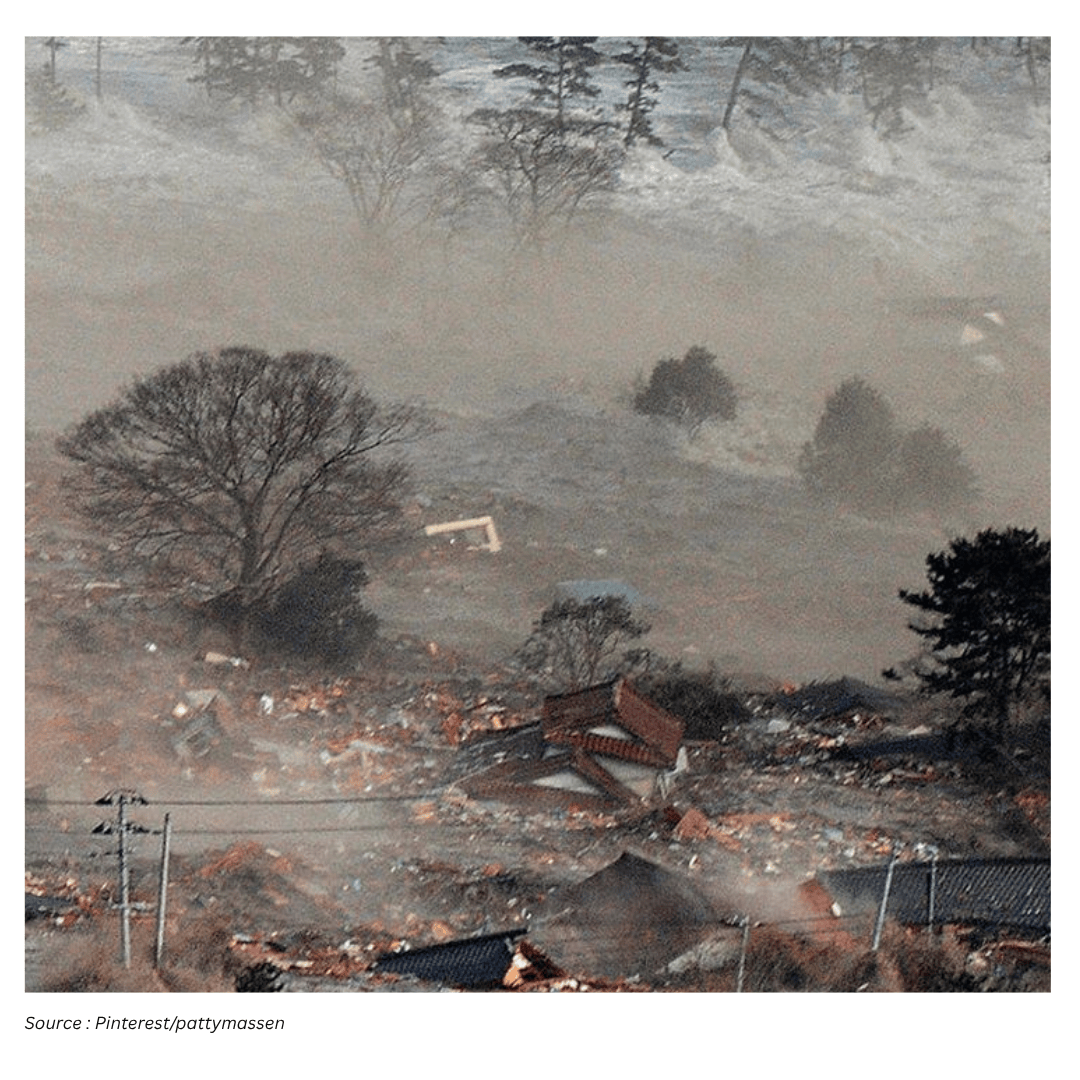
A series of wildfires in Los Angeles County has caused widespread devastation in California. The fires have been linked to at least 24 deaths and the destruction of more than 12,000 homes and structures. Thousands of residents have been evacuated, and the danger has not yet passed.
Beyond the immediate human and physical toll, the event is also becoming a defining moment for insurance markets. Some estimates have placed the cost of damage and broader economic loss at between A$400 billion and A$450 billion. Yet only A$32 billion of that is insured. That mismatch is not just an accounting detail; it is a warning about how exposed communities can become when insurance coverage fails to keep pace with risk.
For Australians, the significance is twofold. First, the California experience illustrates how quickly a modern, developed market can slide into an insurance availability and affordability crisis. Second, because insurance and reinsurance are global businesses, large losses in one region can influence pricing and capacity elsewhere. That means the LA fires may have consequences far beyond the United States, including upward pressure on premiums in Australia.
The insurance protection gap: what it means in practice
The gap between insured and uninsured losses is often described as the “insurance protection gap”. In California’s case, the gap is stark: a very large share of the overall loss is expected to be uninsured. As rebuilding begins, that reality changes who pays. Uninsured losses do not disappear; they fall on property owners and on public funds.
This is one of the most consequential features of catastrophic events. When a large portion of losses is uninsured, households may face major costs at the worst possible time, and governments can be pushed to step in to support recovery. In turn, the financial burden can spread beyond the directly affected areas, particularly when public funds are used.
California’s experience also underlines that the protection gap can widen over time. The state has been experiencing increasingly devastating wildfires year-on-year, and the gap has grown as the risk environment has intensified and the insurance market has responded.
Why insurers are pulling back in California
In response to growing risk, escalating insurance claims, and rising reinsurance and construction costs, at least a dozen of the largest property insurers have withdrawn from offering wildfire coverage in California or have restricted new policies. These insurers represent about 80% of the Californian market.
The retreat has been visible not only in broad market statistics but also in individual policy decisions. In March 2024, State Farm — the United States’ largest property insurer — announced it would not renew about 72,000 policies in selected California postcodes deemed too risky to insure for wildfire. Those non-renewals included 1,626 homes in Pacific Palisades, an area that later became the scene of one of the most damaging recent fires.
The underlying issue is straightforward: for insurers, it is becoming too expensive to do business in California. When the likelihood of large losses rises, and when the expected cost of rebuilding increases, the economics of offering coverage can deteriorate quickly. In such conditions, insurers may reduce exposure by limiting new policies, tightening underwriting, or exiting certain types of cover altogether.
The rise of last-resort coverage — and its limits
As private coverage becomes harder to obtain, demand increases for alternative protection options. One of the most prominent in California is the California FAIR Plan, a state-legislated collaboration between insurers.
The FAIR Plan exists to provide a wildfire policy for people who have had policies refused by other insurance companies. However, it is designed as a deliberately “bare-bones” product. Homeowners who want cover for additional structures, or protection for theft and liability, or cover for other perils, may need to buy an additional top-up policy.
There are also limits that can leave households underinsured. Residential payouts under the FAIR Plan are capped at US$3 million (A$4.8 million). In areas with high property values and high rebuilding costs, that cap can mean that even insured households may still face significant uncovered losses.
Demand for the FAIR Plan has surged. Since 2019, it has increased by 164%. That rapid growth, combined with the scale of losses associated with the most recent wildfires, has raised concerns that the state’s insurer of last resort could be financially overwhelmed.
Australia is not immune to the protection-gap problem
The insurance protection gap is not unique to California. Australia already faces serious affordability challenges. Around 15% of Australian households are experiencing “extreme insurance stress”, defined as a situation where it costs four weeks or more of pretax income to buy an insurance policy.
This matters because affordability pressures can translate into reduced coverage, higher excesses, or people dropping insurance altogether — all of which can widen the protection gap before a disaster even occurs. When a major event hits, the consequences of underinsurance or non-insurance become visible immediately, often when it is too late to adjust.
The LA wildfires, therefore, are not just a distant tragedy. They are also a signal to Australian households and policymakers about what can happen when risk rises faster than the insurance system can adapt.
How California’s losses can influence Australian premiums
One of the key mechanisms linking California’s wildfire losses to Australian premiums is reinsurance. To cover large-scale losses — such as those associated with the 2022 floods in Australia — insurance companies buy reinsurance in the global market. In practical terms, insurers take out their own insurance policies to help pay the mass claims that follow a major disaster.
Reinsurance is global, and its pricing is sensitive to changing risk, recent losses, and the cost of reconstruction. When large events occur, the cost of global reinsurance capital can rise around the world as risk increases, losses mount, and rebuilding becomes more expensive. Payments for wildfire losses in California can therefore create a ripple effect across multiple insurance markets, including Australia.
This does not mean every policy will be affected in the same way or at the same time. But it does mean that Australian premiums can be influenced by events far from Australia’s shores, because the financial backstop that supports catastrophe payouts is shared across markets.
Climate uncertainty and the pricing of risk
Reinsurance is not the only factor that can push premiums higher in Australia. There is also Australia’s own climate uncertainty and increasing risk of disaster. Future extreme weather and the losses it may cause are becoming harder to predict. Where uncertainty rises, so do premiums, as insurers and reinsurers increase their capital reserving for potential losses.
In other words, premiums are shaped not only by what has happened, but by what insurers believe could happen — and by how confident they can be in modelling that risk. When confidence falls and uncertainty rises, the cost of providing coverage can increase.
Wildfire risk is not confined to the bush — or even to summer
One of the more alarming lessons from California’s crisis is that wildfires are not only a rural problem or an issue limited to the fringes of cities. The losses also demonstrate that severe wildfire impacts can occur outside the traditional “wildfire season”, including in winter.
Australia has so far avoided a catastrophic citywide fire. But the intensification of bushfire seasons could ultimately create a similar insurance crisis if major urban areas face large-scale losses.
Australia has already seen sobering warnings. The 2003 Canberra bushfires destroyed more than 500 homes in suburban areas. In 2021, the Wooroloo fire destroyed 86 homes on Perth’s northeastern fringe. And in 2019, the Gospers Mountain mega-blaze came dangerously close to advancing on Sydney’s urban heart, only to be held back by a timely southerly wind change.
These events show that the boundary between “city” and “bushfire country” can be thinner than many people assume — and that near-misses can become direct hits under the wrong conditions.
What Australian policyholders can do now
For households already insured, one immediate step is to check what a policy covers and what it excludes. A recent parliamentary inquiry into the 2022 floods recommended greater clarification over exclusions, reflecting how confusing and consequential exclusions can be when disaster strikes.
Australians can also review the terms and conditions in their product disclosure statement (PDS). If there is uncertainty about what a particular policy covers, contacting the insurer prior to renewal can help clarify coverage and avoid unpleasant surprises later.
These steps are not simply administrative. In an environment where premiums may rise and where insurers may adjust terms as risk changes, understanding the scope and limits of cover becomes a practical form of financial preparedness.
Improving resilience — and the potential for premium reductions
Beyond checking or upgrading coverage, Australians can take steps to make their homes more bushfire resilient. One recent initiative aims to link resilience actions with insurance outcomes. Last year, the Resilient Building Council partnered with the federal government to launch a free app that homeowners can use to assess their fire resilience. The app is designed to help people identify improvements, and it also offers a pathway to premium reductions from participating insurers when homeowners make qualifying upgrades.
While resilience measures cannot eliminate risk, they can help reduce vulnerability and may support better insurance outcomes, especially as insurers place greater emphasis on property-level risk characteristics.
A broader reckoning for insurance markets
The LA wildfires have sharpened questions that many insurance markets are already confronting: how to price risk that is rising, how to maintain coverage availability as losses grow, and how to prevent protection gaps from leaving households and governments with unmanageable costs.
California’s experience shows what can happen when a major market reaches a tipping point. Insurers can withdraw or restrict coverage, last-resort schemes can come under strain, and large shares of losses can remain uninsured. Because reinsurance connects markets globally, the consequences can extend well beyond the disaster zone.
For Australia, the implications are not limited to the possibility of higher premiums. The larger lesson is about preparedness — financial and physical — in a world where extreme events may be harder to predict and where the costs of recovery can be immense.
Key takeaways for Australian households
The LA wildfires illustrate a large insurance protection gap, with insured losses far below estimated total damage and economic loss.
In California, major insurers have withdrawn from or restricted wildfire coverage, contributing to increased reliance on a last-resort scheme with limited coverage features.
Australia already has significant affordability pressure, with 15% of households facing extreme insurance stress.
Australian premiums may face upward pressure through global reinsurance pricing, as well as from rising uncertainty around future extreme weather.
Policyholders can take practical steps: review coverage and exclusions in the PDS, seek clarification before renewal, and consider resilience improvements, including using tools designed to assess fire resilience and potentially access premium reductions.
Above all, the California crisis is a reminder that under a changing climate, fire risk may be greater — and more geographically widespread — than many people expect, including in and around Australia’s largest cities.