
After the floods, a widening insurance gap: why underinsurance is becoming Australia’s next crisis
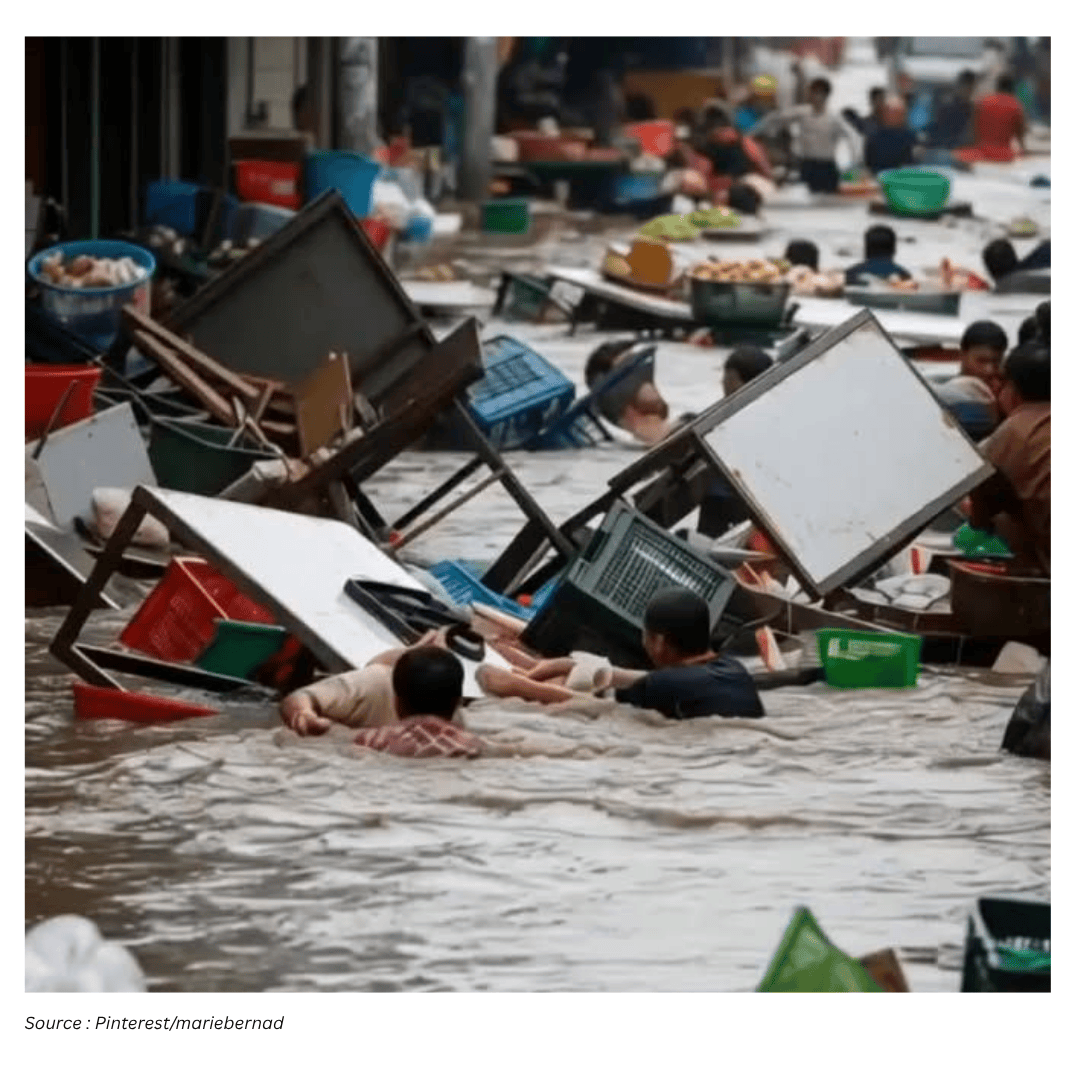
Floods, fire and cyclones: when “rare” disasters become a recurring cost
In the wake of major flooding along Australia’s eastern seaboard, the language used to describe such events can suggest they are extraordinary outliers. New South Wales Premier Dominic Perrottet described the floods as a “1 in 1,000-year event”. Yet that framing sits uneasily with what both science and the insurance industry have been signalling: extreme weather is becoming more frequent and more damaging as the climate warms.
Across Australia, particularly in areas prone to fires, cyclones and floods, households and businesses are dealing with escalating insurance costs. Insurers price cover based on past claims and anticipated future risks, and premiums have risen sharply over the past decade as the cost of disasters has mounted.
The latest report from the Intergovernmental Panel on Climate Change, published this week, predicts that global warming of 1.5°C will lead to a fourfold increase in natural disasters. Even without adding any new assumptions beyond that warning, the direction of travel is clear: more extreme events mean more claims, and more claims feed into higher premiums.
The immediate damage of a flood is visible in ruined homes and disrupted lives. The next wave of damage is often quieter: rising premiums, reduced coverage, and the growth of underinsurance and non-insurance that can leave communities financially exposed when the next disaster hits.
Underinsurance: the slow-moving disaster that follows the fast-moving one
Rising premiums are creating a crisis of underinsurance in Australia. The pattern is straightforward but brutal. When premiums rise beyond what households can afford, some reduce their coverage to cut costs. Others drop insurance altogether. Both outcomes increase the likelihood that a future disaster will cause long-term financial devastation.
This is not a problem confined to one region. While the areas now experiencing their worst flooding in recorded history are not necessarily the same as those identified as the highest-risk in earlier affordability investigations, the underlying dynamics are similar. The people most exposed to the next event are those who are uninsured or underinsured today.
There is also a compounding effect. After a major disaster, premiums can rise further as insurers reassess risks and price in the likelihood of future claims. That can push even more households out of the insurance safety net. The result is a feedback loop: disasters drive premiums up, higher premiums drive coverage down, and lower coverage increases the social and economic harm when the next disaster arrives.
What the affordability data shows in northern Australia
In 2017, the federal government tasked the Australian Competition and Consumer Commission (ACCC) with investigating insurance affordability in northern Australia, where destructive storms and floods are most common. The commission delivered its final report in 2020, and its findings illustrate how quickly affordability pressures can translate into widespread non-insurance.
The ACCC found the average cost of home and contents insurance in northern Australia was almost double the rest of Australia: $2,500 compared with $1,400. The rate of non-insurance was also almost double: 20% compared with 11%.
Those figures matter beyond the immediate geography because they show the social consequences of sustained premium increases. When one in five households in a region is uninsured, the burden of recovery is not simply shifted to individuals; it spreads through communities and, ultimately, to governments and public services.
Two proven levers to reduce premiums — and why they are difficult
The extracted material points to two main ways to reduce insurance premiums.
Reduce global warming. This is not something Australia can achieve on its own, but it can be part of the solution. Since the frequency and severity of extreme weather events are increasing with a warming climate, reducing warming is a direct path to reducing long-run risk.
Reduce the damage caused by extreme events. This can be done by constructing more disaster-resistant buildings or not rebuilding in high-risk areas. The logic here is that if an event causes less damage, claims costs fall, and premiums have less upward pressure.
Neither lever is quick. Climate action is global and cumulative. Mitigation and resilience require planning, investment, and difficult decisions about where and how communities rebuild. But these approaches address the underlying drivers of cost rather than simply redistributing who pays.
The federal reinsurance pool: a different strategy with unclear benefits
Rather than focusing primarily on mitigation, the federal government has put most of its emphasis on a plan to subsidise insurance premiums in northern Australia. In the 2021 budget, the government committed A$10 billion to a cyclone and flood damage reinsurance pool, described as a measure “to ensure Australians in cyclone-prone areas have access to affordable insurance”. Legislation to establish the pool is before parliament.
To understand the proposal, it helps to distinguish between insurance and reinsurance. Reinsurance is effectively insurance for insurers: it protects them from the risk of crippling payouts when disasters trigger large numbers of claims. The government’s stated rationale is that by stepping in and acting as a wholesaler in the reinsurance market, it can drive down reinsurance costs, and those discounted costs will then flow through to consumers in the form of lower premiums.
But the extracted material highlights a central problem: there is no guarantee insurers will pass on cheaper reinsurance to customers. If the pass-through is uncertain, then the benefits to households are uncertain as well.
The costs are also unclear. In practical terms, the government would be shifting risk from insurers to itself, subsidising premiums for some parts of the country from the public purse. That may be a deliberate policy choice, but it raises questions about who benefits and whether the mechanism is the most effective way to protect those most exposed.
What the ACCC concluded about reinsurance pools
The ACCC inquiry examined the idea of a reinsurance pool in detail. While acknowledging there could be some benefits, the commission concluded the risks outweighed the rewards. Its position was blunt: it did not consider a reinsurance pool necessary to address availability issues in northern Australia.
This matters because the pool is framed as a solution to the affordability crisis, yet the major inquiry commissioned to investigate that crisis did not endorse it as necessary. That does not automatically make the pool ineffective, but it does place a higher burden on policymakers to demonstrate that it will deliver real, measurable relief to consumers rather than primarily reshuffling risk within the insurance system.
Two core shortcomings: targeting and mitigation
Beyond questions about whether insurers would pass on savings, the extracted material identifies two deeper failures in the reinsurance pool approach.
1) It does not target help to those who need it most. Subsidising insurance companies is not the same as supporting low-income households. If a policy reduces costs across a market without regard to income, it may provide the largest dollar benefit to those paying the highest premiums, not necessarily those most at risk of dropping cover.
There is a growing body of research showing that natural disasters, and the ways governments respond to them, contribute to greater inequality. The problem is not only who suffers the initial damage, but who can afford protection beforehand and who can recover afterwards.
The South Australian Council of Social Service has argued that improving insurance access for people on low incomes at risk from natural disaster requires targeted support. One option raised is promoting non-profit “mutual” insurance schemes. The point is not that one model alone will solve the problem, but that affordability pressures are unevenly distributed and require responses designed with that reality in mind.
2) It does not reduce the overall cost of natural disasters. Only mitigation can bring the overall cost down. The extracted material lists examples of mitigation measures, including public works such as building levees, upgrading stormwater systems, and conducting planned burns, as well as improving buildings through measures like reinforcing garage doors, shuttering windows, and managing vegetation around homes.
The ACCC’s report identified ways mitigation strategies could be tied into insurance pricing, creating incentives for risk reduction. Yet none of these approaches has been incorporated into the federal government’s response described in the extracted content. Without mitigation, the underlying risk remains, and so does the pressure on premiums.
Limited support beyond government — and what that signals
Another striking detail in the extracted material is the lack of broad support for the reinsurance pool outside the federal government. Neither the ACCC, the insurance industry nor community sector advocacy organisations are described as supporting reinsurance as a meaningful solution.
That absence of support does not, by itself, disprove the policy’s potential. But it does suggest that key stakeholders either doubt the pool will deliver consumer savings, or believe it fails to address the main drivers of rising premiums and underinsurance.
Why a regional pool does not solve a national problem
Even if the reinsurance pool were to provide some relief in parts of northern Australia, the extracted material argues it will not do much for those affected by the current floods and will not address the broader national trajectory of rising insurance costs.
For the areas of New South Wales and Queensland now flooded, as well as the rest of the country outside the pool’s ambit, the relentless rise in insurance costs is expected to continue. The consequence is predictable: more homes will slip out of the insurance safety net, increasing the scale of financial devastation after future disasters.
The broader warning is that a reinsurance pool cannot be a national solution because, as argued in the extracted material, it is not the solution for northern Australia. If the policy does not address availability and affordability in the region it is designed to help, it is difficult to see how it could be scaled or replicated to resolve the wider insurance crisis.
What a “better plan” would prioritise
The extracted content does not offer a single, simple fix—and it explicitly notes there are no cheap and easy solutions. But it does map out the terrain of what a more credible approach would prioritise.
Take climate vulnerability seriously in federal policy. The rising frequency and severity of extreme weather events is not a temporary shock; it is a structural shift in risk that affects households, insurers, and governments.
Focus on mitigation to reduce losses. Public works and building improvements can reduce the damage from disasters and therefore reduce the overall cost that ultimately feeds into premiums.
Design targeted support for low-income households. If underinsurance is concentrated among those least able to absorb losses, then support mechanisms should be designed to keep those households inside the insurance system, rather than relying on broad subsidies whose benefits may not reach them.
Link mitigation efforts to insurance pricing. The ACCC identified ways this could be done. Aligning incentives can encourage risk reduction and help ensure that investments in resilience translate into affordability benefits over time.
The central message is that shifting risk around the system is not the same as reducing it. Without serious mitigation and targeted affordability measures, premium pressures will continue and underinsurance will deepen—turning each new disaster into the trigger for a larger social and financial crisis.
The stakes: protecting communities before the next event
After a flood, communities face an urgent recovery task. But the longer-term challenge is to avoid a future where insurance becomes unaffordable for a growing share of households, leaving more people exposed each time disaster strikes.
The extracted material describes a country on the edge of that scenario: premiums rising, non-insurance increasing, and policy responses that may not address the core drivers of cost. If the goal is to keep Australians protected, the emphasis must shift from blanket industry subsidies toward measures that reduce physical risk and ensure those on low incomes can maintain meaningful cover.
That is the difference between managing the aftermath of disasters and planning for a future in which disasters are more frequent—and the insurance system, and the communities it is meant to support, are not pushed past breaking point.