
Natural disaster insurance is leaving more homeowners exposed. Here are the questions that shape any solution
A system under stress
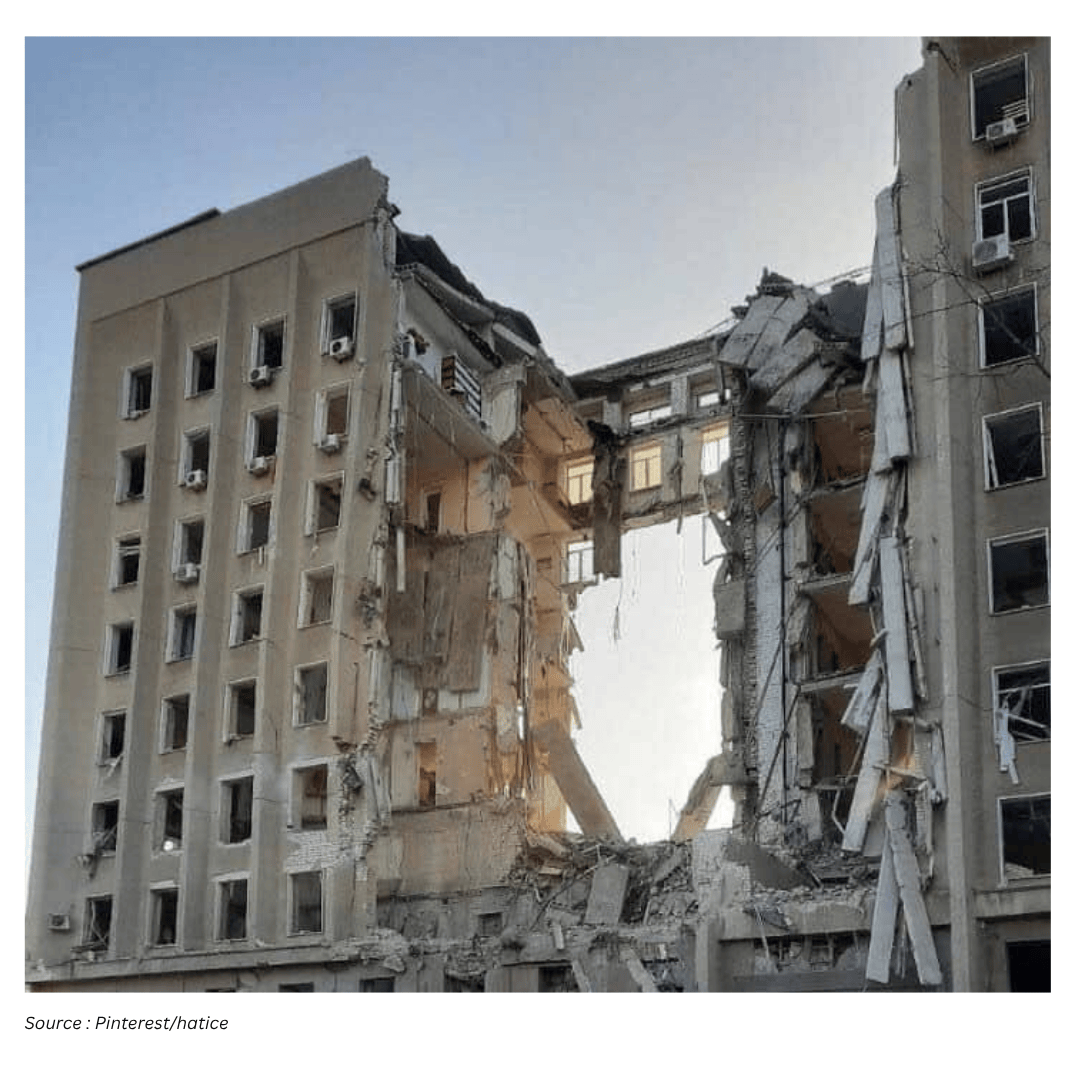
Wildfires that have devastated large parts of Los Angeles County have renewed attention on a problem that has been building for years: many Americans are struggling to insure their homes. In California, seven of the 12 largest insurance companies stopped issuing new homeowners policies starting in 2022, citing increased risks tied to climate change. Similar pullbacks have occurred in other vulnerable states, including Louisiana and Florida.
The consequences show up in two ways. First, more people are going without coverage: the proportion of Americans without home insurance has risen from 5% to 12% since 2019. Second, those who can still buy coverage are paying more than ever, with premiums in California and elsewhere increasing dramatically over the past five years.
When private insurance markets cannot or will not provide coverage, government often steps in. The United States has done this before, and at scale. The National Flood Insurance Program was created in the 1960s because private insurers largely excluded flood coverage. At the state level, programs such as the California FAIR Plan function as insurers of last resort, offering limited coverage to people who cannot obtain private insurance. The California FAIR Plan alone serves more than 450,000 Californians.
But public backstops face their own limits. The scale of catastrophe losses can be so large that it becomes difficult for these programs to remain financially stable. It is not inconceivable that recent wildfires could exceed the reserves and reinsurance available to the California FAIR Plan. Under the way the plan is structured, that could force other insurers—and ultimately homeowners—to make up the difference.
These realities can make the public debate feel stuck between bad options: shrinking availability, rising costs, or growing public exposure. Yet before anyone can choose among options, they have to be clear about what problem they are trying to solve. In catastrophe insurance, that clarity is often missing.
Insurance is not only a product; it is a set of policy choices
Insurance is commonly described as a financial product that allows people to share risk. The basic idea is straightforward: if catastrophe strikes one person, they do not bear the costs alone. But insurance is never only about money. Every form of insurance embodies values and serves public policy goals, which means it requires social, political, and sometimes moral trade-offs.
That is why a useful starting point is not a specific proposal, but a set of questions. In research on disaster insurance, more than a dozen design questions emerge. Three stand out as foundational because they determine the shape of any program—private, public, or mixed.
- What are the goals of the insurance?
- Who is being insured?
- How are policyholders and their risks classified?
These questions may sound abstract, but they are practical. They influence whether coverage is broadly available, whether it is affordable, how losses are reduced, and who bears the remaining costs when disasters overwhelm the system.
First, define the problem you are actually trying to solve
In insurance debates, the problem is often described as: “Homeowners need insurance coverage that they cannot afford in the private market.” That description seems intuitive, but it can be misleading because it treats affordability as the only barrier. In reality, some properties in disaster-prone areas are simply too risky to insure on conventional terms.
Consider a home in a coastal area that floods repeatedly. From an insurer’s perspective, the question becomes: how much would a policy have to cost to cover repeated losses? When a house is subject to losses over and over, it may make more economic sense to buy and demolish it rather than continue to insure it. That example illustrates why the challenge is not always about pricing a policy lower. Sometimes the underlying risk makes the standard insurance model unstable.
Defining the problem carefully also clarifies which values are at stake. One value is protecting the investments of current homeowners—particularly long-time residents, including elderly homeowners who may have limited ability to absorb sudden premium increases. Another value is pricing risk correctly so that people do not move into dangerous developments. Put more broadly, policymakers are often balancing society’s collective responsibility toward people in financial distress against the goal of fair and efficient use of social resources. Those values can conflict, and insurance design forces the conflict into the open.
What are the goals of disaster insurance?
Once an insurance solution is chosen rather than some other intervention, a primary goal is often compensation: paying policyholders after a loss. But compensation is not the only goal, and treating it as the only goal can lead to incomplete solutions.
Insurance also aims to reduce losses. Insurers can shape behavior in many ways, including using premiums to encourage mitigation. A common example is charging lower premiums to homeowners who keep their property free of flammable brush. Because many mitigation behaviors affect other people as well—neighbors, communities, and emergency responders—loss reduction can generate social benefits beyond the individual policyholder.
When insurance has social benefits, distribution matters. How those benefits are allocated—along race, gender, class, and other lines—becomes part of the policy question. This is not a separate issue from insurance mechanics; it is embedded in the choices about what is covered, who qualifies, and what incentives are built into pricing and underwriting.
Even the decision to prioritize one goal over another changes the character of a program. A system designed mainly to compensate after disasters may look different from one designed to prevent losses, stabilize housing markets, or spread costs broadly across society. If policymakers do not state the goals clearly, they risk building a program that satisfies none of them.
Who is being insured—and how big is the pool?
Insurance works by transferring risk from an individual to a larger group that can share it. This is “risk pooling.” Pools that are too small struggle because there are not enough people to share the burden when losses hit. That basic principle becomes especially important for catastrophes, where losses can be widespread and correlated.
In public solutions, expanding the pool can be a way to expand coverage. The National Flood Insurance Program, for example, brings many homeowners across the country into a pool. Yet it also excludes some losses, such as damage from wind during a hurricane. That detail is a reminder that “who is in the pool” is not only about geography or participation; it is also about what types of risk are included or carved out.
There are also proposals that contemplate much broader pooling. The proposed INSURE Act, introduced in the last Congress, would effectively place the entire nation in a pool to cover a variety of catastrophic risks, including flood, wildfire, earthquake, and others. Whether such a model is desirable depends on what goals policymakers prioritize and how they think costs and responsibilities should be shared.
Importantly, being in the same pool does not mean everyone is treated the same. People with the same insurance can be charged different premiums and receive different levels of coverage. That reality leads directly to the third foundational question.
How are policyholders and risks classified?
If insurers treated everyone exactly the same, they would quickly go out of business. That is why insurers analyze large amounts of information about past losses, current conditions, and future predictions to determine the risks posed by each policyholder. This work is done by actuaries and underwriters, and it is often presented as a technical exercise.
But classification is not only math. Insurers classify policyholders in ways that reflect the goals and values of the insurance system. In practice, classification involves balancing multiple aims: widespread availability, broad coverage, affordable pricing, and the social benefits that insurance generates.
One view is that more precise risk classification and pricing are simply better. Because insurance transfers risk, the argument goes, the more accurately risks can be calculated and priced, the better the process works. Under this approach, homes in wildfire-prone areas face higher premiums because their risks are higher, and that is considered both morally sound and economically efficient: each policyholder bears the cost of their own risks.
Yet catastrophe insurance exposes a deeper problem: accuracy in underwriting can conflict with larger social goals. Broad coverage may be a top priority when disasters strike, especially if many people believe the state has a responsibility to protect its residents. Protecting people’s investments in their homes is also a major concern, and abruptly raising premiums on those at high risk can threaten that investment. There is also a communal dimension to disasters: many Americans who are unaffected donate to organizations such as the Red Cross to support victims. A strict focus on underwriting accuracy could undermine that sense of community by treating catastrophe losses as purely individual burdens.
These tensions are not hypothetical. They become acute when private insurers withdraw from markets, when public programs face reserve constraints, and when policymakers must decide whether to expand public involvement or push more risk back onto individuals.
Between “everyone is on their own” and “the state pays for everything”
American public policy on disaster losses sits between two extremes: letting losses lie where they fall, and having the state assume all burdens. The pull between those poles is longstanding. In 1881, Supreme Court Justice Oliver Wendell Holmes Jr. described the idea that the state might make itself a mutual insurance company against accidents and distribute burdens among citizens, providing aid for those who suffered losses from “tempest or wild beasts.” Holmes’ own view was that the state does none of those things—and should not.
That strain of individualism remains influential in U.S. politics, emphasizing individual liberty, personal responsibility, and economic opportunity. In insurance terms, it aligns with risk-based pricing and underwriting that closely tracks the risk each policyholder brings to the pool.
At the same time, modern reality has moved far from Holmes’ description. The state does provide broad forms of social insurance and assistance through programs such as Medicaid, Social Security Disability Insurance, and disaster aid through the Federal Emergency Management Agency and other entities. Since at least the New Deal, there has been broad recognition that some level of collective responsibility is essential; the remaining debate is over where and how much.
In the disaster context, policymakers and researchers often look to insurance or insurance-like plans—public, private, or mixed—as practical tools. FEMA operates the National Flood Insurance Program in cooperation with private insurers and also provides direct grants for mitigation of flood damage. These arrangements illustrate that the U.S. system already blends individual responsibility with collective support. The question is not whether values enter the system, but which values will guide it as catastrophe risks grow.
Why these questions matter now
As floods, storms, wildfires, and other catastrophes become increasingly common, the availability and affordability of property insurance has become a high-profile political issue. The pressure is visible in market exits, rising premiums, growing reliance on insurers of last resort, and increasing numbers of uninsured homeowners.
Because politics involves choices, the most constructive move is often to sharpen the questions before arguing about the answers. What is the insurance meant to accomplish: compensation, prevention, stability, or some combination? Who is included in the pool, and is the pool large enough to function under catastrophe conditions? How should risks be classified, and what trade-offs are acceptable between pricing accuracy and broader social goals?
None of these questions guarantees an easy solution. But they provide a framework for evaluating proposals—whether they rely on private markets, expand public programs, or create new partnerships. In a landscape where both private insurers and public backstops face limits, asking better questions is a necessary first step toward making better choices.